June 17, 2026
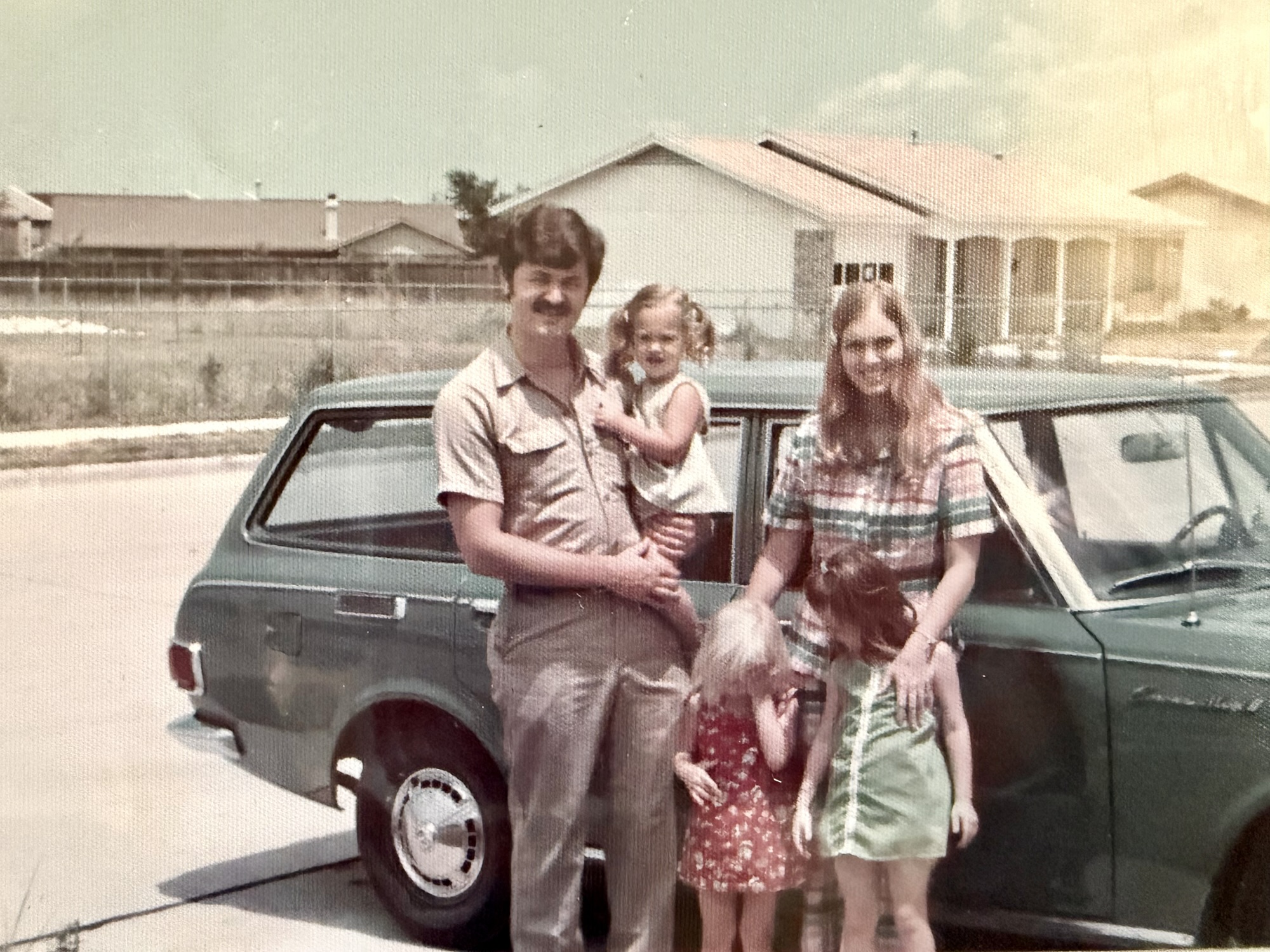
When I was a small child, my mother had long, wavy hair. She loved her curls. Then I believe around the summer of 1981, she cut her hair short and never grew it back. From then on, her curls became her signature. They were her volume, her style, and a source of pride. She loved perms that gave her hair even more body, and she always carried a stylish pick to fluff and lift her curls higher and higher. I can still picture her walking past a mirror, pausing for just a moment to run her hands through her hair, making sure it bounced exactly the way she wanted.


A few weeks ago, while cleaning out her bathroom, I discovered an entire collection of curly hair products. Shampoo, mousse, texture spray, setting spray—every product imaginable devoted to curls and volume. Seeing those bottles lined up together made me smile. They were little reminders of how much she loved her hair and how carefully she cared for it.
These days, Mom can no longer do her own hair. Dementia has taken many things from her, including that daily ritual. As I sorted through her collection of products, I realized that I have become her new stylist. The funny thing is that her hair is no longer naturally curly. It has grown straighter over the years and requires a little coaxing, a little product, and a lot of fluffing to create the curls she still expects to see when she looks in the mirror.
If I don’t roll and fluff her hair while styling it, it dries flat. And flat hair simply will not do. Mom has never liked straight hair on herself. So, Kelly, Mom’s CNA from Gentle Shepherd Hospice, and I have become amateur cosmetologists. We transform her room into a makeshift salon. Mom sits patiently in her wheelchair with Dixie curled up in her lap. We spin her around dramatically between styling sessions while she closes her eyes and trusts us completely, believing she is in the hands of professionals. The only thing missing is someone smacking gum while discussing the latest gossip.


We use three different brushes, experimenting until one of them finally persuades her hair to hold a curl. When the drying is done, we fluff and lift every section, adding a little more volume and a final mist of spray just to make sure everything stays in place. The reward comes when Mom catches sight of herself in the mirror. Her face brightens. She smiles. She sees curls. For a moment, everything feels right.
At the same time, I have been caring for the ferns that hang in baskets throughout her sunroom. The easiest way to water them is to carry them outside and gently spray them with the hose. As I work, I take breaks to fluff their fronds and remove any straight or damaged ends that seem to weigh them down. I laugh at myself for treating plants the same way I treat my mother’s hair, but I can’t help it.
What draws me in most are the fiddleheads—the tightly coiled spirals of new fern fronds as they emerge and unfurl. They look like tiny curls waiting to open. Every time I see them, I think of Mom. I find myself giving the ferns the same gentle attention I give to her hair. I fluff, straighten, trim, and nurture them with the same tenderness.

Perhaps that is why I love the ferns so much. Their curls remind me of hers.
Dementia has changed so many things. It has unraveled memories and altered routines that once seemed permanent. But when I am helping Mom with her hair, or tending to the curled fiddleheads in her sunroom, I am reminded that love often survives through the smallest acts of care. A brush through her hair. A gentle spray of water. A little fluffing here and there.
The curls may not come naturally anymore, but they still make her happy.
And that is reason enough to keep tending them.

