August 5, 2026
I have been asking myself a question that has no easy answer.
How do I write about Nancy’s dementia without telling a story that isn’t mine, and without intruding on the private life my mother built for her family?

The landscape of my mother’s mind is changing, and the map that once guided her is disappearing. Names vanish. Conversations drift away. Yesterday becomes unreachable. Yet, even as memory slips beyond her grasp, something deeper remains. A smile. A familiar touch. The comfort of a voice she has loved for decades.
Dementia is also changing me. It is changing how I remember, how I grieve, how I love, and how I understand what it means to accompany someone through the final chapters of life. That is the story I have permission to tell.

There are moments that belong only to my parents—the quiet conversations, the private losses, the intimate acts of caregiving that have shaped their marriage in ways no outsider can fully understand. Those moments deserve protection. They are not mine to publish.They belong to two people who built a lifetime together, long before I ever understood what enduring love required.
I can write about the woman who raised me, Marianne, Melanie and Daniel, and watching her slowly drift toward a horizon we cannot follow.

I can write about discovering that grief often begins long before death arrives. I can write about how the importance of being present speaks louder than words. I can write about what I witness, what I feel, and what I learn.
Dementia can be profoundly isolating for families. It often feels as though we are carrying experiences that few people can truly see or understand. My hope is that by sharing this journey with you, it brings a sense of connection and reminds you that you are not alone.
Stories become our borrowed memory. They hold what time tries to steal. They remind us that a person is never defined by the final chapter of life, but by the countless pages that came before.
I want this blog to become a testament to her life.

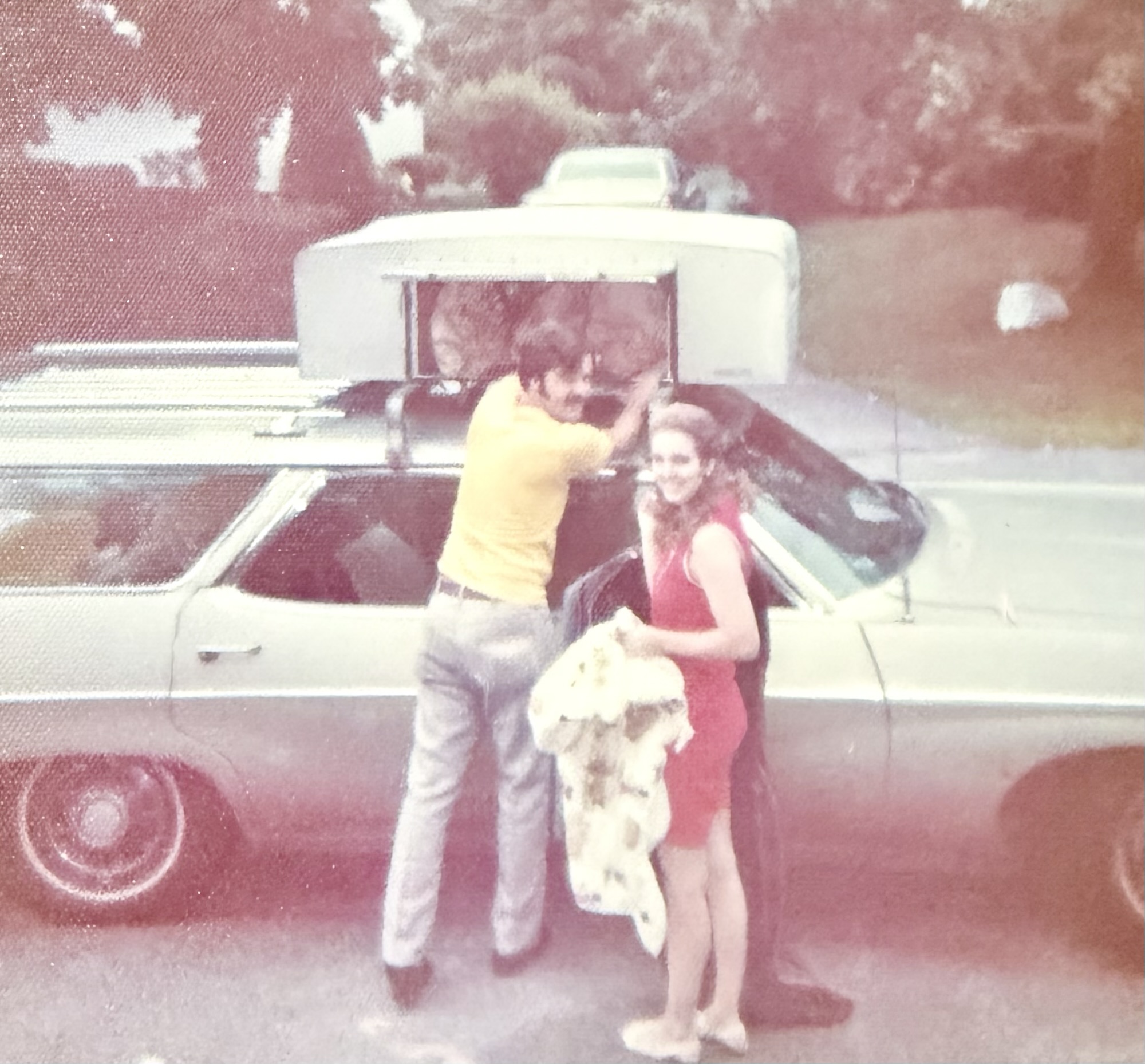
I want readers to meet the woman who laughed before dementia silenced her voice. I stand in a memory and I see my mother cooking with a “pinch of sugar”. She knows every birthday. She remembers and reenacts every family mishap. She still calls each one of us by name with certainty and joy.
I want to write in a way that preserves my mother’s dignity. She is more than her diagnosis. She is the woman who shaped my life long before dementia entered ours. If I write about her confusion, I also want to write about her courage. If I describe what has been lost, I also want to remember what remains—her gracious and giving heart that illuminates her porcelain beauty – inside and out, and becomes the love that glues our family.
I also want to honor my father. Growing up in a large family, he was surrounded by love, responsibility, and the understanding that family is built by showing up for one another. He learned early to share life’s joys and burdens, to care for those around him, and prioritize togetherness. Those lessons became the foundation of the man he is today.


Many of the moments that define his care belong only to him and my mother. They are theirs to hold, not mine to share. But I can bear witness to the quiet, steadfast love those moments represent—a love that asks for no recognition yet speaks volumes through faithfulness, patience, and grace. It can be seen in something as simple as the way he sets the table for every meal, carefully recreating the same place setting each time so that nothing is out of place to cause confusion when Mom sits down.


The dying experience is deeply personal, but it is also profoundly human. My hope is that these reflections become a mirror in which other sons, daughters, spouses, and friends can recognize their own love, sorrow, and remembrance.
That is the story I want to tell—what it means to love someone faithfully as they slowly disappear from the life we once knew, while never disappearing from our hearts.
Somewhere in time, love remembers everything.

